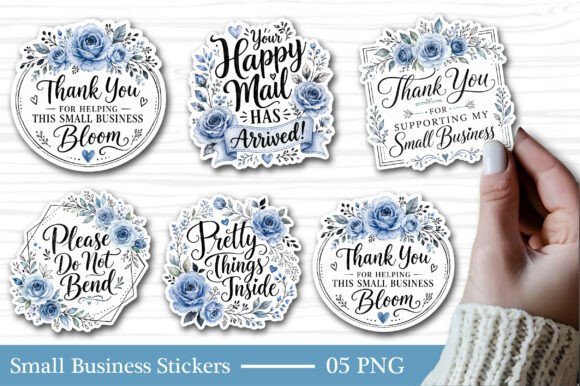
Elevating Brand Identity with High-Resolution Small Business Packaging Stickers Print
In the bustling ecosystem of modern commerce, the difference between a product that sits on a shelf and one that flies off it often comes down to presentation. For entrepreneurs, artisans, and creative professionals, the unboxing experience has become a critical touchpoint in customer satisfaction. This is where the concept of Small Business Packaging Stickers Print transitions from a mere afterthought to a strategic asset. Whether you are shipping handmade soaps, curating subscription boxes, or labeling artisanal jams, the visual appeal of your packaging communicates quality before the customer even touches the product.
The digital marketplace has democratized access to high-quality design assets, allowing business owners to bypass expensive graphic design retainers. By utilizing premium digital files specifically optimized for Small Business Packaging Stickers Print, creators can maintain professional standards while keeping overhead costs low. The key lies in understanding the technical specifications that bridge the gap between a digital image and a physical sticker that withstands the rigors of shipping and handling.
The Technical Foundation of Professional Labeling
When discussing Small Business Packaging Stickers Print, resolution is not just a number; it is the determinant of clarity. A common pitfall for many new business owners is using web-optimized images (typically 72 DPI) for physical production. This results in pixelated, blurry edges that undermine brand credibility. To achieve crisp, clear results suitable for both digital mockups and actual print projects, a resolution of 300 DPI (dots per inch) is the industry gold standard.
Consider the specific attributes of high-quality design assets available today. Leading resources now offer illustrations created with the assistance of advanced AI tools and finished with meticulous human care. These files often boast dimensions of 4000 x 4000 pixels. At this size, the artwork provides immense flexibility. You can scale the image down for a tiny logo on a jewelry box or utilize the full resolution for a large seal on a shipping carton without losing a single detail. The availability of a clean WHITE background further simplifies the workflow, ensuring that when the design is placed on colored packaging materials, it integrates seamlessly or can be easily isolated using standard editing software.
Versatility Across Creative Industries
The utility of these high-resolution assets extends far beyond simple adhesive labels. The modern creator needs assets that serve multiple functions to maximize return on investment. When you acquire a set of premium PNG files with transparent backgrounds, you are unlocking a suite of tools for unlimited creative uses. Here is how different sectors leverage these resources:
- Scrapbooking and Creative Journals: Memory keepers and journal enthusiasts use these crisp illustrations to add professional-grade embellishments to personal projects, ensuring that every page looks published rather than homemade.
- Event Invitations: From birthday bashes to elegant wedding suites and baby shower parties, these graphics serve as the focal point for custom invitations, setting the tone for the event before it begins.
- Sublimation and Apparel: The 300 DPI resolution is crucial for sublimation T-shirt printing. Low-resolution images break apart under the heat press process, but high-fidelity files ensure vibrant, lasting colors on fabric.
- Wall Art and Stationery: Entrepreneurs creating greeting cards, posters, or framed wall art rely on the scalability of 4000x4000 pixel files to produce large-format prints that remain sharp.
- Digital Branding: In the online realm, these same files act as branding graphics for websites and blogs, providing visual consistency between a company's physical products and its digital storefront.
Practical Applications for Product-Based Businesses
For those deeply involved in Small Business Packaging Stickers Print, the application is often tactile and immediate. Imagine a small batch candle maker. They have poured hundreds of jars, but the glass is plain. By printing high-resolution stickers derived from these premium PNG files, they instantly transform a generic vessel into a branded commodity. The transparency of the background allows the sticker to blend perfectly with the glass or the label color, creating a "floating" effect that looks sophisticated.
Similarly, consider the world of DIY crafts and digital planners. Creators who sell digital downloads or physical planner inserts require clipart projects that look clean on screens and in print. The dual nature of these files—optimized for both RGB (screen) and CMYK (print) workflows—makes them indispensable. Whether adhering a sticker to a tote bag, a mug, or a gift box, the integrity of the image remains intact.
Real-world scenario: A boutique soap seller prepares for a holiday market. Instead of ordering thousands of pre-printed boxes, which requires a large upfront capital outlay, they purchase plain kraft boxes. They then print their custom designs on sticker paper using the high-DPI files. This approach allows for agility; if they want to change their branding mid-season, they simply print new stickers rather than discarding unused inventory.
Evaluating Suitability and Managing Expectations
While the benefits of using AI-assisted, high-resolution artwork are clear, it is important for users to evaluate their specific needs. Not every project requires a 4000x4000 pixel file; however, having the option ensures future-proofing. If you anticipate expanding your product line to include larger formats like banners or trade show displays, starting with high-resolution assets is a prudent strategy.
It is also worth noting the role of the "transparent background." In the context of Small Business Packaging Stickers Print, this feature is vital for die-cut stickers. When sending files to a professional printer for die-cutting, a transparent PNG or a vector file with a clear alpha channel ensures the cutter knows exactly where the ink ends and the material begins. Files with white backgrounds baked in can sometimes cause confusion in automated cutting processes, leading to unwanted white borders around your colorful designs.
Furthermore, the mention of AI assistance in the creation of these illustrations highlights a shift in the industry. These tools allow for unique artwork that might be cost-prohibitive to commission traditionally. However, the "finished with care" aspect is what separates usable assets from raw AI output. Human oversight ensures that text is legible, lines are continuous, and color palettes are harmonious, addressing the limitations often found in purely generative art.
Maximizing Value Through Strategic Implementation
To truly capitalize on these resources, business owners should adopt a holistic view of their branding. The same illustration used on a packaging sticker can be resized for a website favicon, printed on a thank-you card included in the box, or used as a watermark on social media photos of the product. This consistency reinforces brand recognition.
When selecting files for your next Small Business Packaging Stickers Print run, consider the material you are printing on. Glossy sticker paper enhances the vibrancy of the 300 DPI images, making colors pop, while matte paper offers a more organic, rustic feel that pairs well with kraft packaging. The clarity of the source file ensures that regardless of the substrate chosen, the final output remains professional.
In conclusion, the accessibility of high-quality, versatile digital assets has leveled the playing field for small businesses. By leveraging 4000x4000 pixel, 300 DPI PNG files with transparent backgrounds, creators can produce packaging, apparel, and stationery that rivals major corporations. Whether for sublimation, scrapbooking, or commercial labeling, the emphasis on resolution and clean design fundamentals ensures that every print job reflects the care and quality inherent in the brand itself. As the market continues to evolve, the ability to adapt quickly with high-fidelity graphics will remain a cornerstone of successful small business operations.