Elevating Digital Presence with a Modern Browser Icon for Business Websites
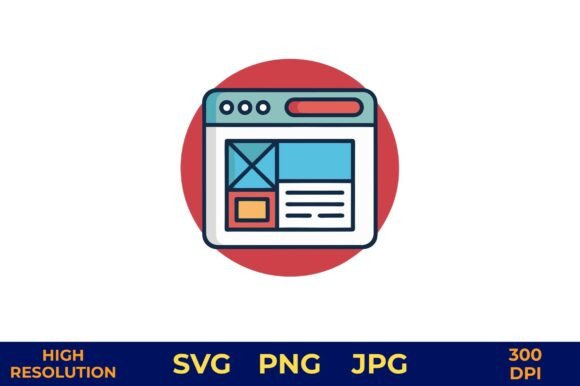
In the rapidly evolving landscape of digital branding, the smallest details often carry the most significant weight. While businesses invest heavily in logo design, color palettes, and website architecture, one critical element is frequently overlooked until the final moments of deployment: the browser icon. Often referred to as a favicon, this tiny graphic serves as the visual anchor for your brand across tabs, bookmarks, and history logs. Utilizing a Browser Icon for Business Websites that features a colorful vector illustration with a solid outline and modern design elements can transform a generic user experience into a cohesive, professional journey. This article explores the strategic importance of high-quality browser icons, the versatility of scalable vector graphics, and how these assets extend far beyond the address bar into a wide array of creative applications.
The Strategic Value of Visual Consistency
When a user opens multiple tabs in a modern web browser, the title text often gets truncated, leaving only the icon visible to identify the page. In this crowded digital environment, a distinct Browser Icon for Business Websites acts as a lighthouse, guiding users back to your content instantly. A generic or low-resolution icon can make a business appear amateurish or outdated, whereas a custom-designed asset signals attention to detail and professionalism.
The shift toward modern design elements—characterized by clean lines, vibrant colors, and solid outlines—reflects current aesthetic trends that prioritize clarity and impact. Unlike complex logos that may lose detail when shrunk to 16x16 or 32x32 pixels, a vector illustration designed specifically for browser use maintains its integrity at any size. This ensures that whether a client is viewing your site on a high-definition desktop monitor or a mobile device, your brand identity remains sharp and recognizable.
Understanding Vector Graphics and Resolution
The foundation of a superior browser icon lies in its file format. Raster images, such as standard JPEGs or low-quality PNGs, are composed of pixels. When these are scaled down or up, they often suffer from aliasing, resulting in jagged edges or blurriness. In contrast, SVG (Scalable Vector Graphics) files use mathematical equations to define shapes and lines. This means an SVG can be scaled infinitely without any loss of quality.
For professionals seeking the highest fidelity, accessing a source file with dimensions of 4200px x 4200px at 300 dpi provides an unparalleled level of detail. While a browser tab does not require this massive resolution, starting with a high-definition master file allows designers to scale the image down perfectly for various contexts. It ensures that the solid outlines remain crisp and the colorful vectors retain their vibrancy, regardless of the output medium. This "master file" approach is essential for maintaining brand consistency across different platforms and print materials.
Beyond the Browser: Versatile Applications of Digital Assets
One of the most compelling aspects of acquiring a high-quality digital product, such as a modern browser icon illustration, is its adaptability. While the primary intent may be to enhance a website, the utility of a 4200px SVG or PNG with a transparent background extends into a vast ecosystem of creative projects. For creators, educators, and business owners, this single asset can serve as the cornerstone for a comprehensive branding kit.
Enhancing Social Media and Digital Marketing
Social media platforms thrive on visual consistency. The same colorful vector illustration used as a Browser Icon for Business Websites can be repurposed as a profile picture, a story highlight cover, or a watermark for video content. Because the design features modern elements and a solid outline, it stands out effectively against the busy backgrounds of social feeds. Furthermore, the transparent background capability of PNG files ensures that the icon integrates seamlessly into any promotional graphic, whether it is a Facebook ad, an Instagram post, or a LinkedIn banner.
Print Media and Physical Branding
The bridge between digital and physical branding is often built on shared visual assets. A high-resolution file suitable for web use is equally capable of driving print initiatives. Consider the following applications where such an illustration adds value:
- Business Cards and Tags: The solid outline and vibrant colors ensure the icon prints clearly on cardstock, making it an ideal logo substitute for small-format printing.
- Invitations and Greeting Cards: For event planners or businesses sending corporate greetings, the modern design aesthetic fits well with contemporary invitation styles.
- Wedding and Event Decor: The versatility of the design allows it to be used on "Save the Date" cards, wedding menus, seating charts, and table numbers, providing a unified look for special events.
- Merchandise: With a resolution of 300 dpi, the image is ready for sublimation or screen printing on mugs, posters, pillows, and t-shirts. This opens avenues for creating branded merchandise for employees or customers.
Creative Projects for Hobbyists and Professionals
The scope of usage is not limited to corporate branding. Photographers, florists, and planners often require flexible graphics to enhance their portfolios and client deliverables. A Browser Icon for Business Websites with a colorful, modern design can be incorporated into:
- Printable Kits: Designers can build entire kits around the icon's color scheme and style, offering cohesive downloads for clients.
- Albums and Scrapbooking: The high-quality PNG format allows for easy layering in digital scrapbooking projects or physical photo albums.
- Bridal Shower Decor: The aesthetic appeal of modern vector art makes it suitable for decorative elements in event planning.
- Planners and Organizers: Icons can be used as bullet points, section dividers, or cover art for custom planners.
Technical Considerations for Implementation
When integrating a new icon into your digital infrastructure, understanding the technical delivery method is crucial. It is important to note that products described as "digital downloads" do not involve physical shipping. Upon purchase, the user typically receives immediate access to files in multiple formats: SVG for scalability, PNG for transparency and web readiness, and JPG for universal compatibility.
The inclusion of a transparent background is particularly vital for web design. It allows the icon to sit naturally on dark mode interfaces, colored headers, or favicons with non-white backgrounds without an unsightly white box surrounding the image. For developers, implementing an SVG directly into the HTML code can further optimize load times and ensure the icon renders sharply on Retina displays and other high-DPI screens.
Optimizing for User Experience and Accessibility
A well-designed browser icon contributes to overall usability. Users often rely on visual cues rather than text to navigate between open tabs. By choosing a design with distinct colors and a clear solid outline, you reduce cognitive load for your visitors. This is especially relevant for audiences with visual impairments or those browsing in low-light conditions where high-contrast, simple shapes are easier to distinguish.
Moreover, the modern design elements inherent in these vector illustrations align with current accessibility standards that favor simplicity and clarity. Avoiding overly intricate details ensures that the icon remains legible even when viewed on smaller smartphone screens or smartwatches where browser tabs are condensed.
The Economic and Practical Benefits of Ready-to-Use Assets
For small business owners and independent creators, the cost and time associated with commissioning a custom illustrator can be prohibitive. Accessing a pre-designed, high-quality asset offers a pragmatic solution. The ability to "download and print your own" empowers users to take immediate control of their branding without waiting for drafts or revisions.
This model supports agility. If a business decides to launch a new product line, update their social media strategy, or print a batch of promotional t-shirts for an upcoming conference, having a versatile, high-resolution master file on hand eliminates bottlenecks. The investment in a single, robust digital asset yields compounding returns as it is deployed across websites, social channels, print collateral, and merchandise.
Maintaining Brand Integrity Across Platforms
Consistency is the hallmark of strong branding. When the same visual language is used on a website's browser tab, a company's Instagram profile, a printed business card, and a promotional mug, it reinforces brand recall. A Browser Icon for Business Websites that is designed with versatility in mind ensures that this consistency is easy to maintain. The solid outlines and colorful vectors provide a distinctive signature that becomes synonymous with the business itself.
Furthermore, using a standardized high-quality source file prevents the common issue of "logo drift," where different versions of a logo degrade in quality as they are copied and pasted across different mediums. Starting with a 4200px, 300 dpi source guarantees that every iteration, from the tiniest favicon to a large poster, originates from the same pristine data.
Future-Proofing Your Digital Identity
As technology advances, the requirements for digital assets continue to evolve. Screens are becoming sharper, and the variety of devices accessing the internet is expanding. Relying on low-resolution or outdated graphics is a risk that can undermine a brand's perceived value. By adopting modern vector illustrations with scalable properties, businesses future-proof their visual identity.
The trend toward minimalism and bold outlines in UI design suggests that the aesthetic of these modern browser icons will remain relevant for years to come. Investing in a design that balances contemporary style with timeless principles of clarity ensures longevity. Whether the application is a cutting-edge web app, a traditional print brochure, or a piece of apparel, the fundamental need for clear, attractive, and scalable imagery remains constant.
In conclusion, the humble browser icon is far more than a technical requirement; it is a pivotal component of a holistic branding strategy. By leveraging high-quality, versatile digital assets, professionals and creators can ensure their brand presents a unified, professional, and engaging face to the world. From the browser tab to the printed page, the impact of a well-chosen, modern vector illustration resonates across every touchpoint of the customer journey.